Buy waschbecken.eu ?
We are moving the project
waschbecken.eu .
Are you interested in purchasing the domain
waschbecken.eu ?
domain@kv-gmbh.de · 0541-91531010
Buy waschbecken.eu ?
What is a resultant wave in physics?
In physics, a resultant wave is the combination of two or more individual waves that are superimposed on each other. When waves with different amplitudes, frequencies, or phases overlap, they create a new wave pattern known as the resultant wave. The properties of the resultant wave, such as its amplitude, frequency, and phase, are determined by the properties of the individual waves that combine to form it. Resultant waves are important in understanding phenomena such as interference, diffraction, and standing waves. **
What is the resultant of a triangular load?
The resultant of a triangular load is the single force that can replace the distributed load while producing the same effect on the structure. It is the equivalent concentrated force that acts at a specific point on the structure. The magnitude and direction of the resultant force depend on the shape and intensity of the triangular load. Calculating the resultant force is important in structural analysis to simplify the analysis of complex loads. **


Similar search terms for Resultant
Top-Angebote
Products related to Resultant:
-
Inspired Living Multifunction Faucet & Sink Wrench Easy Plumbing Install & Removal Tool yellowA simple, dependable wrench that transforms frustrating faucet and sink repairs into an effortless DIY job. The Multifunction Faucet & Sink Wrench is built for homeowners and pros who dread crawling under sinks it reaches deep, tight spaces to...35,97 $*Shipping: 0,00 $Secure redirect to the provider
-
Ebern Designs Ronique 120Cm Wall Mounted Double Bathroom Vanity Sink with Ceramic Basin, Faucet and Hoses Brown 1,200mm WThe set comes everything you need and shipped by two sturdier packages. Including a vintage-toned sink with sintered stone-textured countertop, complementing ceramic basin and copper faucet, water connecting hoses and drain pipe, each component is masterfully crafted for high durability, ensuring a seamless installation and integration into the bathrooms. Ebern Designs699,99 £*Shipping: 0,00 £Secure redirect to the provider
-
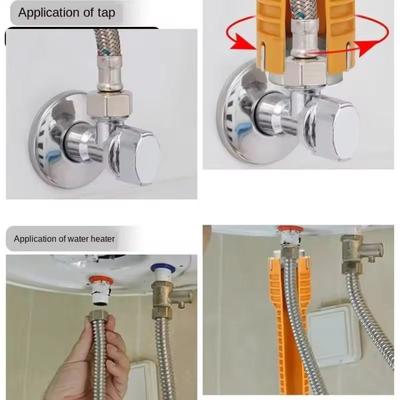
Uplift Treasures 8 In 1 Sink Faucet Wrench Plumbing Repair Tool 8 In 1 YellowProduct Description Make faucet installation and repairs easier with this 8 in 1 sink faucet wrench tool. Designed for tight spaces under sinks, it features a non slip grip and multiple functions to handle kitchen and bathroom plumbing tasks...59,97 $*Shipping: 0,00 $Secure redirect to the provider



-
What formula do I use to calculate the resultant force?
To calculate the resultant force, you can use the formula: Resultant force = √(Fx^2 + Fy^2) Where Fx is the force in the x-direction and Fy is the force in the y-direction. This formula is derived from the Pythagorean theorem, which states that the magnitude of the resultant force is equal to the square root of the sum of the squares of the individual forces in each direction. **
-
What is the resultant vector with two lengths and angles?
The resultant vector with two lengths and angles is the single vector that represents the combined effect of the two original vectors. To find the resultant vector, we use the parallelogram law of vector addition, which involves adding the two vectors tip to tail and then drawing the diagonal of the parallelogram formed. The length and angle of the resultant vector can be calculated using trigonometric functions such as sine and cosine. This resultant vector represents the combined effect of the original vectors in terms of both magnitude and direction. **
-
What is the angle when two forces form a resultant?
When two forces form a resultant, the angle between the two forces can be found using the law of cosines. The angle can be calculated using the formula: cos(θ) = (F1^2 + F2^2 - R^2) / (2 * F1 * F2), where F1 and F2 are the magnitudes of the two forces and R is the magnitude of the resultant force. This angle represents the direction of the resultant force in relation to the original forces. **
-
What is the graphical resultant force of more than 3 forces?
The graphical resultant force of more than 3 forces is found by using the polygon method. This method involves drawing the forces as vectors with their tails at the same point, and then completing the polygon by drawing the final side from the head of the last vector to the tail of the first vector. The resultant force is then the vector that closes the polygon. This method allows us to find the magnitude and direction of the resultant force by using vector addition. **


How do you calculate the resultant force without using the cosine law?
To calculate the resultant force without using the cosine law, you can use the Pythagorean theorem. First, you would calculate the horizontal and vertical components of the forces. Then, you would use the Pythagorean theorem to find the magnitude of the resultant force by taking the square root of the sum of the squares of the horizontal and vertical components. Finally, you can use trigonometric functions to find the direction of the resultant force. **
How much does a good faucet for the bathroom sink cost?
The cost of a good faucet for a bathroom sink can vary depending on the brand, style, and material. On average, a good quality bathroom sink faucet can range from $50 to $200. However, there are also high-end options that can cost several hundred dollars. It's important to consider factors such as durability, water efficiency, and design when choosing a faucet for your bathroom sink. **
Top-Angebote
Products related to Resultant:
-
All Categories Goods Modern White Ceramic Bathroom Vanity Top Sink With Pre Drilled Faucet Hole, Durable Vanity Basin Modern White Ceramic Bathroom Vanity Top Sink With Pre Drilled Faucet Hole, Durable Vanity BasinElevate Your Bathroom with Timeless Elegance Transform your space with this White Ceramic Bathroom Vanity Top Sink with PreDrilled Faucet Hole, designed for women who value both beauty and practicality. Its crisp white finish brightens any bathroom,...109,97 $*Shipping: 0,00 $Secure redirect to the provider
-
Uplift Treasures 8 in 1 Multi Functional Sink Faucet Wrench Universal Large Open Plumbing Tool For Bathroom & Household Water Pipe 8 in 1 Multi Functional Sink Faucet Wrench Universal Large Open Plumbing Tool For Bathroom & Household Water PipeProduct Description Make faucet and pipe installation easier with this 8in1 MultiFunctional Sink Faucet Wrench. Designed with a large openend structure and universal compatibility, this tool is perfect for tightening or loosening nuts, pipes, and...42,97 $*Shipping: 0,00 $Secure redirect to the provider
-
Inspired Living Multifunction Faucet & Sink Wrench Easy Plumbing Install & Removal Tool yellowA simple, dependable wrench that transforms frustrating faucet and sink repairs into an effortless DIY job. The Multifunction Faucet & Sink Wrench is built for homeowners and pros who dread crawling under sinks it reaches deep, tight spaces to...35,97 $*Shipping: 0,00 $Secure redirect to the provider
-
Ebern Designs Ronique 120Cm Wall Mounted Double Bathroom Vanity Sink with Ceramic Basin, Faucet and Hoses Brown 1,200mm WThe set comes everything you need and shipped by two sturdier packages. Including a vintage-toned sink with sintered stone-textured countertop, complementing ceramic basin and copper faucet, water connecting hoses and drain pipe, each component is masterfully crafted for high durability, ensuring a seamless installation and integration into the bathrooms. Ebern Designs699,99 £*Shipping: 0,00 £Secure redirect to the provider
-
What is a resultant wave in physics?
In physics, a resultant wave is the combination of two or more individual waves that are superimposed on each other. When waves with different amplitudes, frequencies, or phases overlap, they create a new wave pattern known as the resultant wave. The properties of the resultant wave, such as its amplitude, frequency, and phase, are determined by the properties of the individual waves that combine to form it. Resultant waves are important in understanding phenomena such as interference, diffraction, and standing waves. **
-
What is the resultant of a triangular load?
The resultant of a triangular load is the single force that can replace the distributed load while producing the same effect on the structure. It is the equivalent concentrated force that acts at a specific point on the structure. The magnitude and direction of the resultant force depend on the shape and intensity of the triangular load. Calculating the resultant force is important in structural analysis to simplify the analysis of complex loads. **
-
What formula do I use to calculate the resultant force?
To calculate the resultant force, you can use the formula: Resultant force = √(Fx^2 + Fy^2) Where Fx is the force in the x-direction and Fy is the force in the y-direction. This formula is derived from the Pythagorean theorem, which states that the magnitude of the resultant force is equal to the square root of the sum of the squares of the individual forces in each direction. **
-
What is the resultant vector with two lengths and angles?
The resultant vector with two lengths and angles is the single vector that represents the combined effect of the two original vectors. To find the resultant vector, we use the parallelogram law of vector addition, which involves adding the two vectors tip to tail and then drawing the diagonal of the parallelogram formed. The length and angle of the resultant vector can be calculated using trigonometric functions such as sine and cosine. This resultant vector represents the combined effect of the original vectors in terms of both magnitude and direction. **
Similar search terms for Resultant
-
Uplift Treasures 8 In 1 Sink Faucet Wrench Plumbing Repair Tool 8 In 1 YellowProduct Description Make faucet installation and repairs easier with this 8 in 1 sink faucet wrench tool. Designed for tight spaces under sinks, it features a non slip grip and multiple functions to handle kitchen and bathroom plumbing tasks...59,97 $*Shipping: 0,00 $Secure redirect to the provider
-
Inspired Living Multifunction Faucet & Sink Wrench Easy Plumbing Install & Removal Tool redA simple, dependable wrench that transforms frustrating faucet and sink repairs into an effortless DIY job. The Multifunction Faucet & Sink Wrench is built for homeowners and pros who dread crawling under sinks it reaches deep, tight spaces to...35,97 $*Shipping: 0,00 $Secure redirect to the provider
-
Ebern Designs Ronique 100Cm Wall Mounted Single Bathroom Vanity Sink with Ceramic Basin, Faucet and Hoses Brown 1,000mm WThe set comes everything you need and shipped by two sturdier packages. Including a vintage-toned sink with sintered stone-textured countertop, complementing ceramic basin and copper faucet, water connecting hoses and drain pipe, each component is masterfully crafted for high durability, ensuring a seamless installation and integration into the bathrooms. Ebern Designs439,99 £*Shipping: 0,00 £Secure redirect to the provider
-
What is the angle when two forces form a resultant?
When two forces form a resultant, the angle between the two forces can be found using the law of cosines. The angle can be calculated using the formula: cos(θ) = (F1^2 + F2^2 - R^2) / (2 * F1 * F2), where F1 and F2 are the magnitudes of the two forces and R is the magnitude of the resultant force. This angle represents the direction of the resultant force in relation to the original forces. **
-
What is the graphical resultant force of more than 3 forces?
The graphical resultant force of more than 3 forces is found by using the polygon method. This method involves drawing the forces as vectors with their tails at the same point, and then completing the polygon by drawing the final side from the head of the last vector to the tail of the first vector. The resultant force is then the vector that closes the polygon. This method allows us to find the magnitude and direction of the resultant force by using vector addition. **
-
How do you calculate the resultant force without using the cosine law?
To calculate the resultant force without using the cosine law, you can use the Pythagorean theorem. First, you would calculate the horizontal and vertical components of the forces. Then, you would use the Pythagorean theorem to find the magnitude of the resultant force by taking the square root of the sum of the squares of the horizontal and vertical components. Finally, you can use trigonometric functions to find the direction of the resultant force. **
-
How much does a good faucet for the bathroom sink cost?
The cost of a good faucet for a bathroom sink can vary depending on the brand, style, and material. On average, a good quality bathroom sink faucet can range from $50 to $200. However, there are also high-end options that can cost several hundred dollars. It's important to consider factors such as durability, water efficiency, and design when choosing a faucet for your bathroom sink. **
* All prices are inclusive of VAT and, if applicable, plus shipping costs. The offer information is based on the details provided by the respective shop and is updated through automated processes. Real-time updates do not occur, so deviations can occur in individual cases. ** Note: Parts of this content were created by AI.